
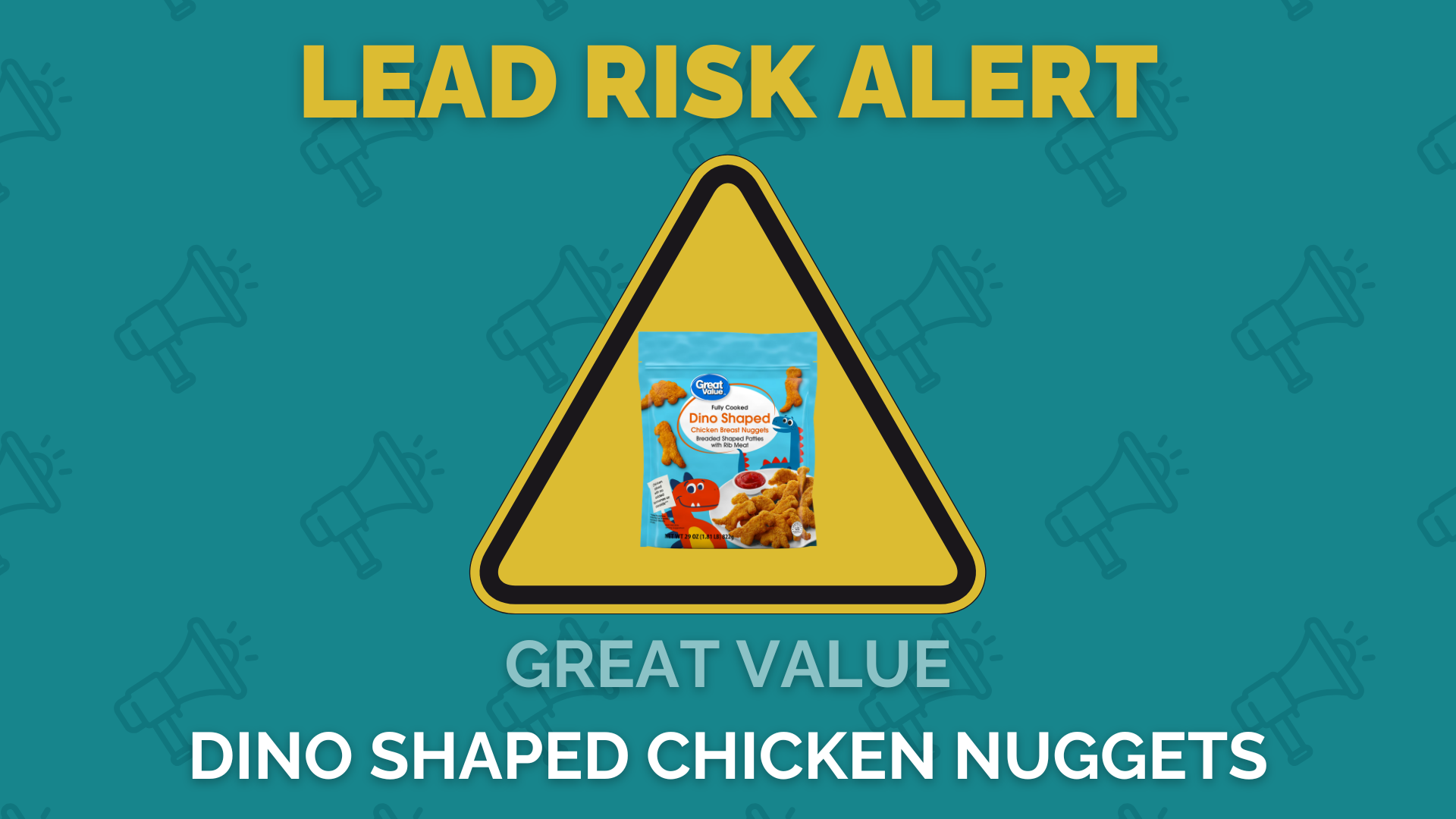
(UPDATED 4/7/26) As of April 6th, the USDA FSIS has lifted their public health alert issued for Great Value Fully Cooked Dino Shaped Chicken Breast Nuggets. The product has been confirmed to not pose a public health concern, following additional testing that found no elevated levels of lead.
Further laboratory testing conducted in collaboration with the New York State Department of Health concluded that the initial result was a false positive, caused by “sporadic lead contamination at the laboratory during analysis” and not contamination of the product itself.
While this product does not pose a public health concern, lead exposure remains an important issue, especially for young children. Parents are advised to contact their child’s healthcare provider if they are concerned about potential exposure, and to contact the company with any questions.
Read the full updated announcement here
On April 1st, the USDA’s Food Safety and Inspection Service (FSIS) issued a public health alert for Great Value Fully Cooked Dino Shaped Chicken Breast Nuggets due to potential lead contamination. The affected product is packaged in 29 oz (1.81 lbs) plastic bags containing approximately 36 pieces. Consumers should check for the following details on the back of the packaging:
- “BEST IF USED BY” date: FEB 10 2027
- Lot Code “0416DPO1215”
- Establishment number “P44164”
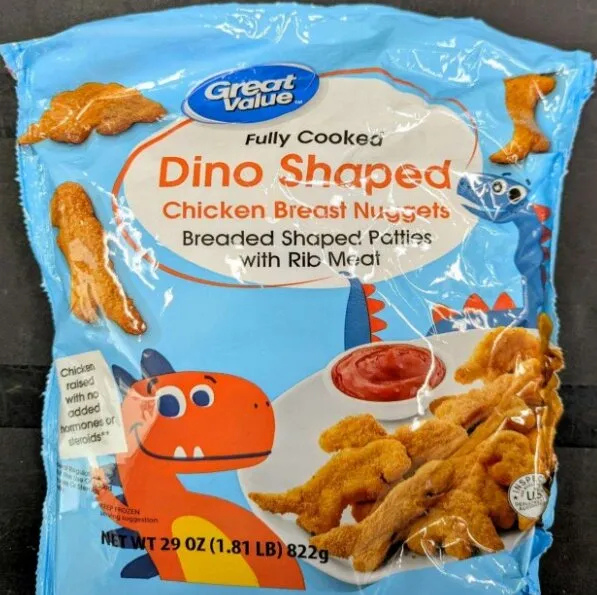
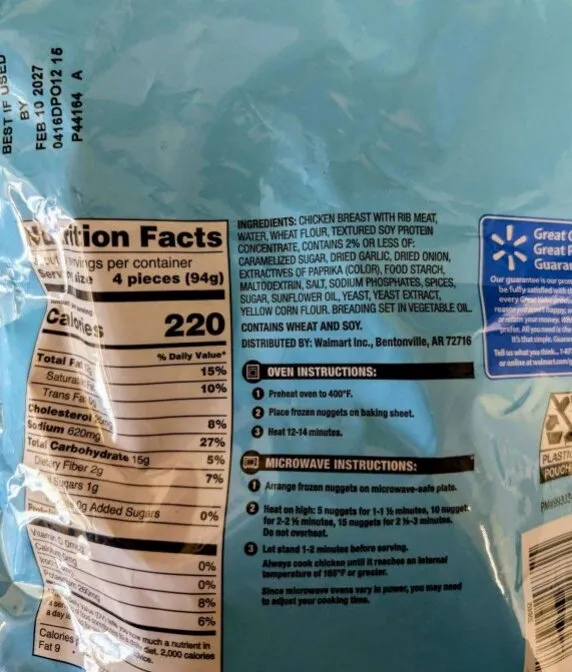
Images Source: USDA
Why is This a Concern?
Frozen foods, such as chicken nuggets, are a quick and convenient option for busy families. Dinosaur-shaped nuggets are especially popular among young children, making this public health alert particularly concerning. Although the product is no longer available for purchase, families may still have it at home. The affected chicken nuggets were produced on February 10, 2026, and distributed to Walmart stores across the nation. It is currently unclear when the product was removed from store shelves.
Testing identified lead levels of approximately 147 parts per billion (ppb)* in the product. However, it is still unclear whether this measurement reflects a single serving or an individual nugget. For context, the U.S. Food and Drug Administration interim reference level for children is 2.2 micrograms of lead per day (mcg/day) for food. This represents the maximum daily intake from food that is not expected to cause harmful health effects. Depending on how much is consumed, a single serving could exceed the FDA’s daily reference level for lead in children several times over.
No recall has been issued at this time, but families are advised not to consume this product, as there is no safe level of lead exposure.
Infants and young children face the highest risk of lead exposure. Even small amounts of lead can harm their growth, learning, and development. Pregnant people are also at risk for exposure, as lead can cross the placenta through the bloodstream and reach the unborn baby. Lead in the body can also transfer to their baby during breastfeeding due to low calcium levels. Parents should check their freezers and take these next steps to protect their family from lead:
What Should You Do?
- Call your healthcare provider if you are concerned about potential lead exposure and ask about a blood lead level test.
- Questions? Contact John Patrick Lopez, Vice President, Strategy, Communications & Government Affairs, Dorada Foods, at john.patrick@lopezdorada.com.
*What’s a “ppb”?
“Parts per billion” refers to a unit used to measure tiny amounts of a substance in food, water, or the environment. It can be tough to picture. Imagine 1 ppb as:
- 1 penny in $10 million
- 1 second in 32 years
- 1 drop of water in a swimming pool