
Lead Poisoning is a Global Health Issue
There is no safe level of lead in the body, yet lead exposure remains one of the most preventable environmental health threats worldwide. Children and pregnant persons are especially vulnerable since low levels of exposure have been linked to harmful effects on children’s learning, behavior, and development.1,2 Despite decades of evidence, lead exposure continues to affect millions of children, particularly in low-and middle-income countries (LMICs) where environmental protections are limited.3 Additionally, lead exposure is associated with an estimated 6.0 trillion USD in global economic costs in 2019. These costs are largely driven by reduced lifetime earnings and the impacts of cardiovascular disease.4
A global perspective helps explain why lead exposure persists. Risk is shaped less by individual behavior and more by how products are manufactured, regulated, reused, and traded across borders. As a result, lead hazards can persist and spread internationally, even in places with strong local regulations.3,5
Our Partnerships
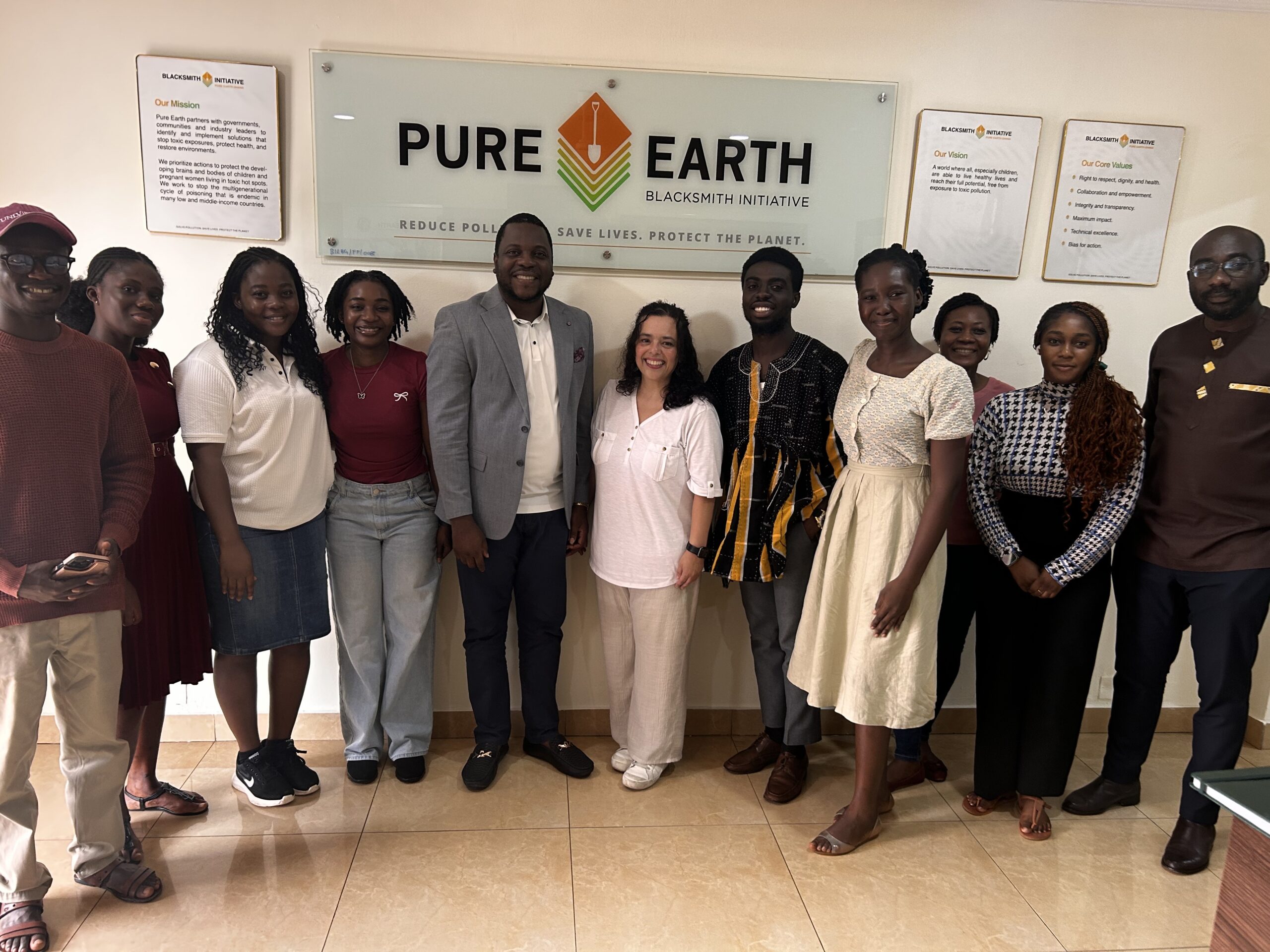
NvCLPPP stays connected to global lead research by working with academic and community partners and by sharing knowledge across programs. These collaborations allow researchers and public health teams to learn from one another and strengthen the evidence base for preventing lead exposure. Current collaborations include academic and research activities linked to:
- University of Ghana
- Pure Earth Ghana
- Kwame Nkrumah University of Science and Technology (KNUST)
- University of the Philippines Manila
- Pure Earth Philippines
Major Global Sources of Lead Exposure
Lead exposure occurs when lead is released from activities such as mining, manufacturing, recycling, and the use or disposal of lead-containing products.6,7 Once released, lead does not break down and can remain in soil, dust, and water, for decades after the initial release.6-8 It can spread beyond its original source through air emissions and deposition, building up in surrounding environments and nearby homes.8 People are exposed by ingesting contaminated soil, water, or food or by breathing in contaminated air or dust.8
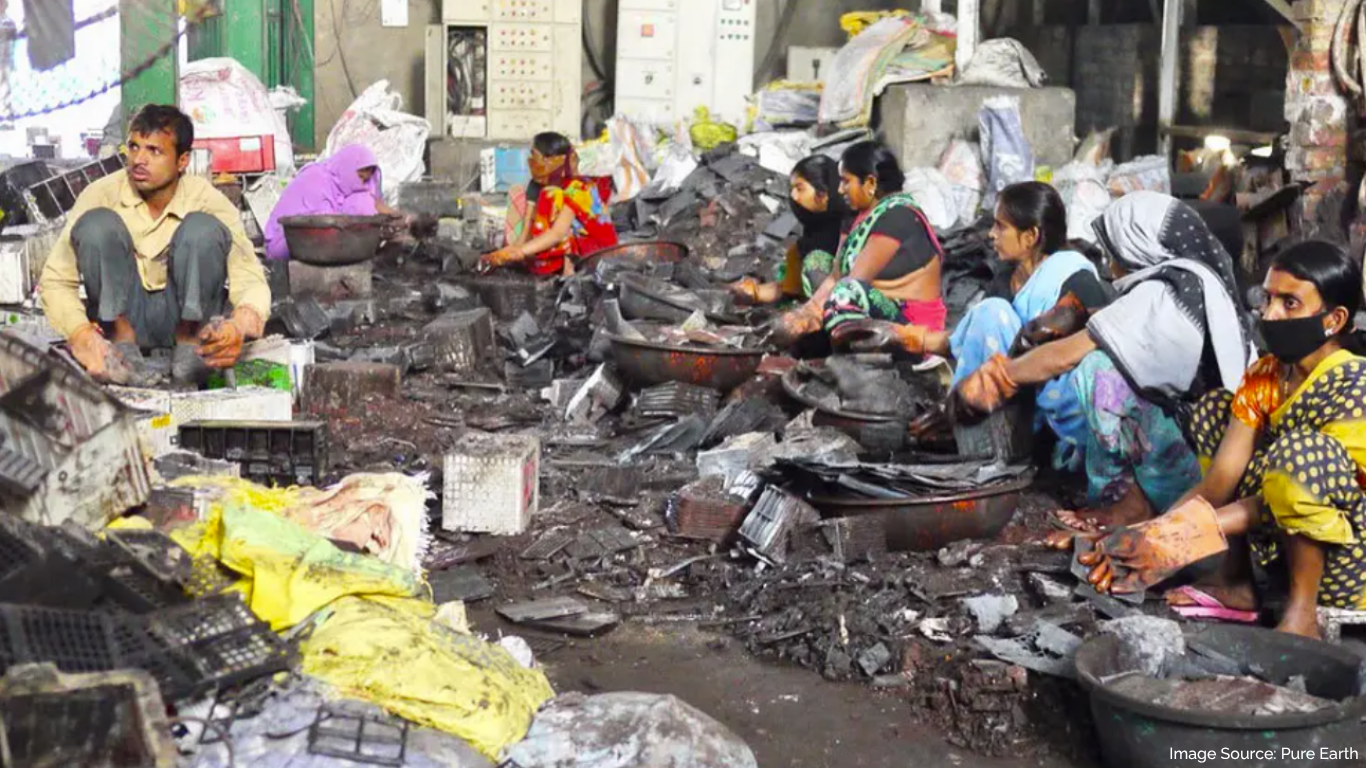
About 85% of the world’s lead is used to manufacture lead-acid batteries, most of which are recycled after use.3
- In many LMICs, recycling occurs in unregulated settings, including residential areas, where batteries are broken open to remove lead components and workers often lack adequate protective equipment.3
- Informal electronic waste recycling involves dismantling or burning materials that contain lead, including circuit boards and solder.9-11
- Acid and lead-containing waste may be discarded directly onto the ground or into waterways.3
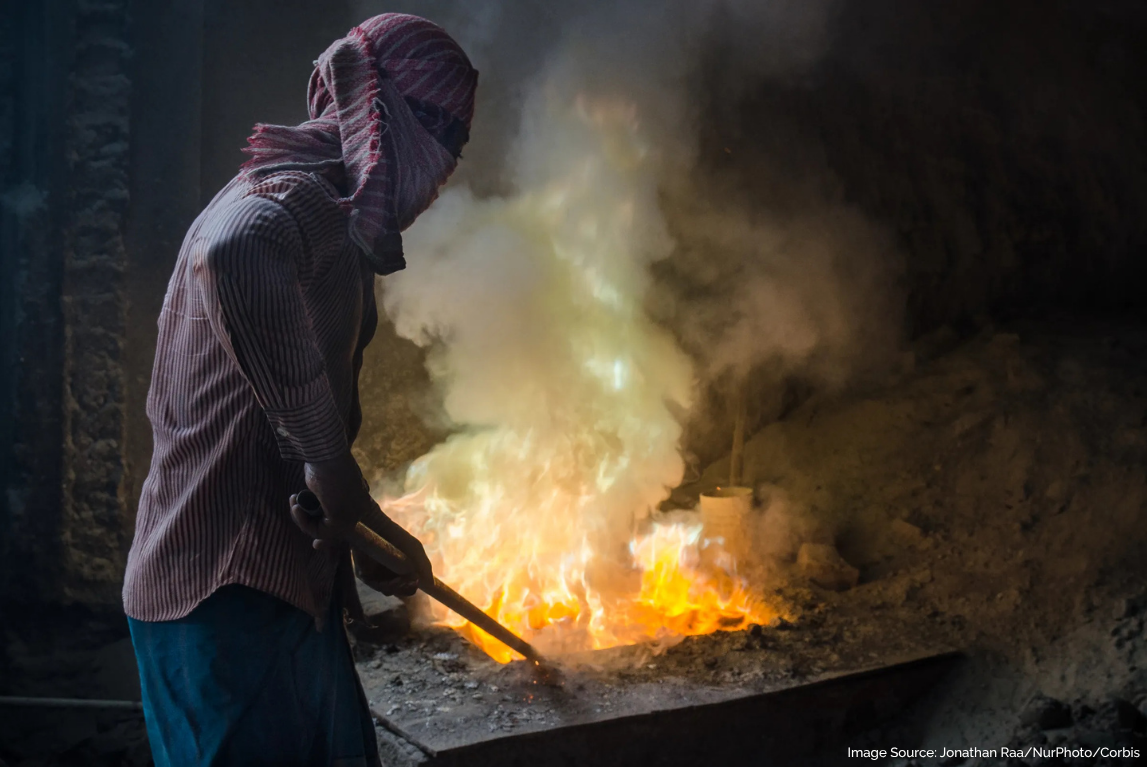
Lead has been mined and smelted for centuries as part of industrial production and use in a wide range of materials and products.7
- Mining involves extracting lead-containing material from the earth.7
- Smelting involves processing this material at high temperatures to produce lead metal for industrial use.7
- These activities contribute to lead exposure by generating industrial emissions that contaminate surrounding environments and increase risk for nearby communities.7
Leaded gasoline was used globally in transportation to improve engine performance and later phased out due to health and environmental impacts.3,12
- Past use of leaded gasoline has resulted in legacy contamination, as lead emitted in vehicle exhaust was deposited into soil and can be re-suspended as dust, resulting in continued exposure through inhalation and ingestion.13
- Its use in on-road vehicles ended globally in 2021, marking a significant global public health milestone.12
- However, leaded fuel remains in use, including in piston-engine aircraft. In the United States, leaded gasoline is still allowed for uses such as aircraft, racing cars, farm equipment, and marine engines, and the Federal Aviation Administration aims to eliminate leaded aviation fuels in piston-engine aircraft by 2030.14,15
Lead-based paint (LBP) remains a source of lead exposure worldwide and is still present in older homes.7,16
- In many LMICs, it continues to be used where regulations are limited or not fully enforced.16,17
- As of January 2024, 48% of countries have legally binding controls on the production, import, sale, and use of LBP.2
Lead pipes, solder, and plumbing fixtures can contaminate drinking water, particularly in aging or poorly maintained systems.2
- Lead in water remains a concern in multiple regions worldwide.5
Lead remains present in certain consumer products worldwide. Sources include but are not limited to:
- Glazed ceramics and cookware that can leach lead into food.16
- Traditional cosmetics and medicines containing lead compounds.16
- Spices adulterated with lead-containing pigments.16
- Staple foods contaminated during processing in lead-affected environments, including grains and legumes prepared in homes with high levels of lead dust.18
- Milk and meat from livestock exposed to lead through contaminated soil, lead paint, or discarded lead-acid batteries.19
What is Recommended Globally
Ending childhood lead poisoning requires country-led action supported by sustained international cooperation. Globally, public health agencies emphasize helping countries develop the capacity to measure exposure, identify major sources of lead, coordinate prevention efforts across sectors, and monitor progress over time.
Commonly recommended actions include:
- Collecting representative childhood blood lead level data to understand the prevalence of exposure and provide an evidence base for prevention and policy action.
- Identifying high-priority sources of lead exposure so that governments can focus efforts on the sources causing the greatest risk to children.
- Developing routine surveillance and assessment systems for blood lead levels and for lead in environmental media, consumer products, and other exposure pathways.
- Establishing national action plans or coordinated strategies that bring together government agencies, researchers, and community partners to prevent and reduce exposure.
- Strengthening laws, regulations, and product standards, along with enforcement mechanisms, to reduce or eliminate lead hazards.
- Investing in surveillance systems, laboratory capacity, environmental monitoring, and prevention programs, supported by technical assistance and collaboration among public health partners.
Together, these efforts support more coordinated action to reduce lead exposure and prevent childhood lead poisoning.
For more information or to explore ways to connect, contact nvclppp@unlv.edu or visit nvclppp.org
- Centers for Disease Control and Prevention. CDC Updates Blood Lead Reference Value. Childhood Lead Poisoning Prevention. 2024. Accessed April 17, 2026. https://www.cdc.gov/lead-prevention/php/news-features/updates-blood-lead-reference-value.html
- World Health Organization (WHO). Lead Poisoning and Health. World Health Organization; 2024. https://www.who.int/news-room/fact-sheets/detail/lead-poisoning-and-health
- Rees, Nicholas, Fuller, Richard. The Toxic Truth: Children’s Exposure to Lead Pollution Undermines a Generation of Future Potential. 2020:1-96. https://www.unicef.org/media/73246/file/The-toxic-truth-children%E2%80%99s-exposure-to-lead-pollution-2020.pdf
- Larsen B, Sánchez-Triana E. Global health burden and cost of lead exposure in children and adults: a health impact and economic modelling analysis. The Lancet Planetary Health. 2023;7(10):e831-e840. doi:10.1016/S2542-5196(23)00166-3
- Rosenthal, F. S, Lanphear, B. P, Gottesfeld, P., Krzyzanowski, M. Commentary: Isee Call for Action for Global Control of Lead Exposure to Eliminate Lead Poisoning. Epidemiology. 2015;26(5):774-777. doi:10.1097/EDE.0000000000000352
- Luby SP, Forsyth JE, Fatmi Z, et al. Removing lead from the global economy. The Lancet Planetary Health. 2024;8(11):e966-e972. doi:10.1016/S2542-5196(24)00244-4
- Obeng-Gyasi E. Sources of lead exposure in various countries. Reviews on Environmental Health. 2019;34(1):25-34. doi:10.1515/reveh-2018-0037
- Kordas K, Ravenscroft J, Cao Y, McLean EV. Lead Exposure in Low and Middle-Income Countries: Perspectives and Lessons on Patterns, Injustices, Economics, and Politics. IJERPH. 2018;15(11):2351. doi:10.3390/ijerph15112351
- Amankwaa EF, Adovor Tsikudo KA, Bowman JA. ‘Away’ is a place: The impact of electronic waste recycling on blood lead levels in Ghana. Science of The Total Environment. 2017;601-602:1566-1574. doi:10.1016/j.scitotenv.2017.05.283
- Desye B, Tesfaye AH, Berihun G, Ademas A, Sewunet B. A systematic review of the health effects of lead exposure from electronic waste in children. Front Public Health. 2023;11:1113561. doi:10.3389/fpubh.2023.1113561
- Hull, Eric V. Poisoning the Poor for Profit: The Injustice of Exporting Electronic Waste to Developing Countries. Duke Environmental Law & Policy Forum. 2010;21(1). https://scholarship.law.duke.edu/cgi/viewcontent.cgi?article=1038&context=delpf
- United Nations Environment Programme. Era of leaded petrol over, eliminating a major threat to human and planetary health. UNEP (United Nations Environment Programme). 2021. Accessed April 17, 2026. https://www.unep.org/news-and-stories/press-release/era-leaded-petrol-over-eliminating-major-threat-human-and-planetary
- Mielke H, Egendorf S. Getting the Lead Out: A Career-Long Perspective on Leaded Gasoline, Dust, Soil, and Proactive Pediatric Exposure Prevention. MRAJ. 2023;11(5). doi:10.18103/mra.v11i5.3813
- Federal Aviation Administration. Building an Unleaded Future by 2030. 2025. Accessed April 17, 2026. https://www.faa.gov/unleaded
- U.S. Energy Information Administration (EIA). Gasoline explained Gasoline and the environment. Accessed April 17, 2026. https://www.eia.gov/energyexplained/gasoline/gasoline-and-the-environment.php
- Rees N, Fuller R. The toxic truth: Children’s exposure to lead pollution undermines a generation of future potential. United Nations Children’s Fund. Published online 2020. https://www.unicef.org/reports/toxic-truth-childrens-exposure-to-lead-pollution-2020
- Ranjbar Z, Pourhadadi D, Montazeri Sh, Roshanzamir Modaberi M. Lead compounds in paint and coatings: A review of regulations and latest updates. Progress in Organic Coatings. 2023;174:107247. doi:10.1016/j.porgcoat.2022.107247
- Tirima S, Bartrem C, Von Lindern I, et al. Food contamination as a pathway for lead exposure in children during the 2010–2013 lead poisoning epidemic in Zamfara, Nigeria. Journal of Environmental Sciences. 2018;67:260-272. doi:10.1016/j.jes.2017.09.007
- Payne J, Livesey C. Lead poisoning in cattle and sheep. In Practice. 2010;32(2):64-69. doi:10.1136/inp.b5672