

When people think about lead exposure, they often think of old paint, drinking water, or soil. Clothing rarely ever comes to mind. However, certain types of clothing, accessories, and even the clothes we wear to work can play a role in how lead enters the home.
Take-home lead from clothing and accessories can transfer on to surfaces, furniture, and other everyday items, making the home environment a source of lead exposure. This can lead to adverse health effects for families, especially for young children who are more vulnerable due to their developing brains and bodies and frequent hand-to-mouth behaviors.
Lead in Clothing and Textile Production
While clothing is not commonly thought of as a source of lead exposure, there are several ways lead can be introduced through items worn on the body. One such pathway is the use of lead in clothing and textile production. Heavy metals like lead are often used in the clothing industry to dye textiles and as finishing agents added for wrinkle resistance and flame retardancy.1,2
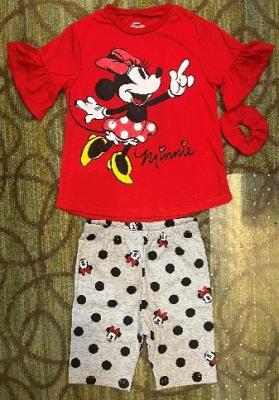
Research on lead in clothing and textile production is limited, but lead has historically been used in certain dyes, pigments, and decorative finishes. According to the U.S. Consumer Product Safety Commission (CPSC), natural and manufactured textiles themselves are generally not expected to contain lead above federal limits.3 However, screen-printed designs and inks that cannot be removed are considered part of the garment and must comply with the federal limit of 100 parts per million (ppm) of total lead for children’s clothing set by the Consumer Product Safety Improvement Act.3 In 2022, CPSC announced a recall of Bentex children’s clothing sets (left) for posing a significant lead exposure risk due to exceeding the federal lead paint and lead content ban.4
Another 2021 investigation by Canadian consumer watchdog program, Marketplace, found that out of 38 samples of children’s, adult’s, and maternity clothes and accessories from fast fashion retailers, one in five items had elevated levels of chemicals, including lead, phthalates, and PFAS.5 The items (left) included a toddler jacket and red purse from fast-fashion brand Shein that contained almost 20 and 5 times, respectively, the amount of lead deemed safe for children in Canada.5 While the companies swiftly removed the products identified as sources of lead exposure by authorities, the use of toxic heavy metals in the production of fashion items persists.
Wearable Consumer Products and Accessories
Fashion accessories can also be a source of lead exposure. A report from the Center of Environmental Health (CEH) tested over 1,950 shoes, handbags, wallets, and belts suspected of containing lead from off-price retailers Ross and Burlington–businesses that sell brand-name and designer goods at low prices.6 Prior to this investigation, CEH routinely found lead-containing fashion accessories sold at these retailers. Their results found that more than 28% and 25% of the fashion accessories researchers purchased in 2022 from Ross and Burlington, respectively, contained lead levels above 300 ppm – three times higher than the federal limit set by CPSC.6
Several wearable consumer products and accessories have been recalled due to potential lead contamination. At the beginning of 2025, CPSC announced a recall of Yaoimiao children’s jewelry sets for containing lead and cadmium levels that exceed federal standards.7 Inexpensive children’s and costume jewelry imported and sold in the United States pose a major risk for young children.8 Due to young children’s hand-to-mouth behaviors, these accessories containing lead can increase the risk of exposure through normal play and everyday use.
Take-Home Lead Exposure
Take-home lead exposure occurs when lead is unintentionally brought into the home from work or hobby environments. This can happen when family members who work with or around lead bring it home on their clothing, shoes, skin, hair, or in their vehicles. Certain occupations and hobbies are more likely to involve lead exposure, including construction, automobile repair, painting and renovation, battery manufacturing or recycling, mining, welding, and hobbies such as stained glass making, ceramics, or making fishing weights. Lead dust from these activities can settle on clothing and everyday items without being visible.9
Once inside the home, lead dust can transfer to floors, furniture, and other surfaces where children play. Young children are especially vulnerable because they frequently touch their surroundings and put their hands or objects into their mouths.10 Close contact with caregivers, such as hugging or sitting on laps, can also increase the risk of exposure.
Who is At Risk
Young children under six years old can be exposed to lead through everyday items, including some clothing and wearable products. Lead can damage their brain, kidneys, and nervous system, impacting growth, development, and behavior patterns.10 Since lead can accumulate in the body over time, exposure during childhood may contribute to long-term health effects later in adulthood. Pregnant persons are also at risk for exposure, as lead can cross through the placenta through the bloodstream and impact critical stages of growth. Lead can also be released during breastfeeding when the body’s calcium levels are low.10
People who work closely with lead are at higher risk of exposure, and textile workers are no exception. Those involved in fabric production may come into contact with dyes, pigments, and other chemicals that can contain lead, particularly in countries with weaker chemical regulations. Research shows that occupational exposure to these substances can cause respiratory, skin, and gastrointestinal symptoms, and may even increase the risk of cancer.1 Many factory workers, however, are not adequately informed about safety procedures or provided with proper protective equipment. These findings highlight the need for stronger precautions and practical steps to protect both workers and consumers from potential chemical hazards.
Recommendations
Skin contact with contaminated clothing can expose both consumers and workers to toxic chemicals.11 Taking the right precautions to limit lead exposure from clothing is important for protecting yourself and your loved ones:
- Wash new clothes before wearing: Always wash new clothes, separately from the rest of your laundry. This helps remove surface chemicals, dyes, and residues that may contain lead.12
- Reuse and repair what you already own: You do not need to discard clothing you already have. Re-wear, mend, or upcycle your existing wardrobe to get the most out of your clothing while minimizing exposure.
- Choose clothing and accessories more mindfully: When possible, prioritize higher-quality items and durable materials. While affordability is important, opting for well-made pieces can reduce reliance on items that may contain higher levels of toxic chemicals.
- Take precautions if you work with lead: If you or a household member work in jobs or hobbies that involve lead (e.g., construction, battery recycling, auto repair, ceramics), wash your hands before leaving work, change clothes and shoes before coming home, wash work clothes separately, and shower as soon as possible to reduce take-home lead exposure.12
- Ask for a blood lead test: You can ask your doctor for a blood lead test at any routine visit. It can help identify lead poisoning and monitor treatment progress. Children should be tested at ages 12 and 24 months, or at least once by 6 years old.
References
- Pinto VCD, Peleg Mizrachi M. The health impact of fast fashion: Exploring toxic chemicals in clothing and textiles. Encyclopedia. 2025;5(2):84. https://doi.org/10.3390/encyclopedia5020084
- Sima MF. Determination of some heavy metals and their health risk in T-shirts printed for a special program. PLoS One. 2022;17(9):e0274952. doi:10.1371/journal.pone.0274952
- Consumer Product Safety Commission. Total lead content. U.S. Consumer Product Safety Commission. Accessed December 17, 2025. https://www.cpsc.gov/FAQ/Total-Lead-Content.
- Consumer Product Safety Commission. Bentex recalls children’s clothing sets due to violation of the federal lead paint and lead content ban; Lead poisoning hazard. U.S. Consumer Product Safety Commission. November 23, 2022. Accessed December 17, 2025. https://www.cpsc.gov/FAQ/Total-Lead-Content.
- Cowley J, Matteis S, Agro C. Experts warn of high levels of chemicals in clothes by some fast-fashion retailers. CBCnews. Published October 1, 2021. Accessed November 18, 2025. https://www.cbc.ca/news/business/marketplace-fast-fashion-chemicals-1.6193385
- Moher C, Bañuelos M. Fashion accessory testing report 2024. Center for Environmental Health. 2024. Accessed December 23, 2025. https://ceh.org/wp-content/uploads/2024/03/Fashion-Accessory-Testing-Report-2024-2.pdf.
- Consumer Product Safety Commission. Yaomiao children’s jewelry sets recalled due to risk of lead and cadmium poisoning; Violations of the federal lead content ban and federal hazardous substances act; Sold exclusively on Amazon by LordRoads. U.S. Consumer Product Safety Commission. January 2, 2025. Accessed December 17, 2025. https://www.cpsc.gov/FAQ/Total-Lead-Content.
- Yost JL, Weidenhamer JD. Accessible and total lead in low-cost jewelry items. Integr Environ Assess Manag. 2008;4(3):358-361. doi:10.1897/IEAM_2007-071.1
- Centers for Disease Control and Prevention. Leave lead at work. National Institute for Occupational Safety and Health (NIOSH). October 25, 2023. Accessed December 18, 2025. https://www.cdc.gov/niosh/docs/2024-101/pdfs/2024-101revised102023.pdf?id=10.26616/NIOSHPUB2024101.
- Centers for Disease Control and Prevention. People at increased risk for childhood lead poisoning. Childhood Lead Poisoning Prevention. April 10, 2024. Accessed December 18, 2025. https://www.cdc.gov/niosh/docs/2024-101/pdfs/2024-101revised102023.pdf?id=10.26616/NIOSHPUB2024101.
- Radcliff N. Hazardous hems: How fashion wreaks havoc on health. Earth Day. October 23, 2025. Accessed December 18, 2025. https://www.earthday.org/hazardous-hems-how-fashion-wreaks-havoc-on-health/
- Achutan C, Carlson K, LeVanseler K, Couch J. Residential washing machine efficacy in removing lead from clothing: A pilot study. J Occup Environ Hyg. 2025;22(10):779-787. doi:10.1080/15459624.2025.2497871