
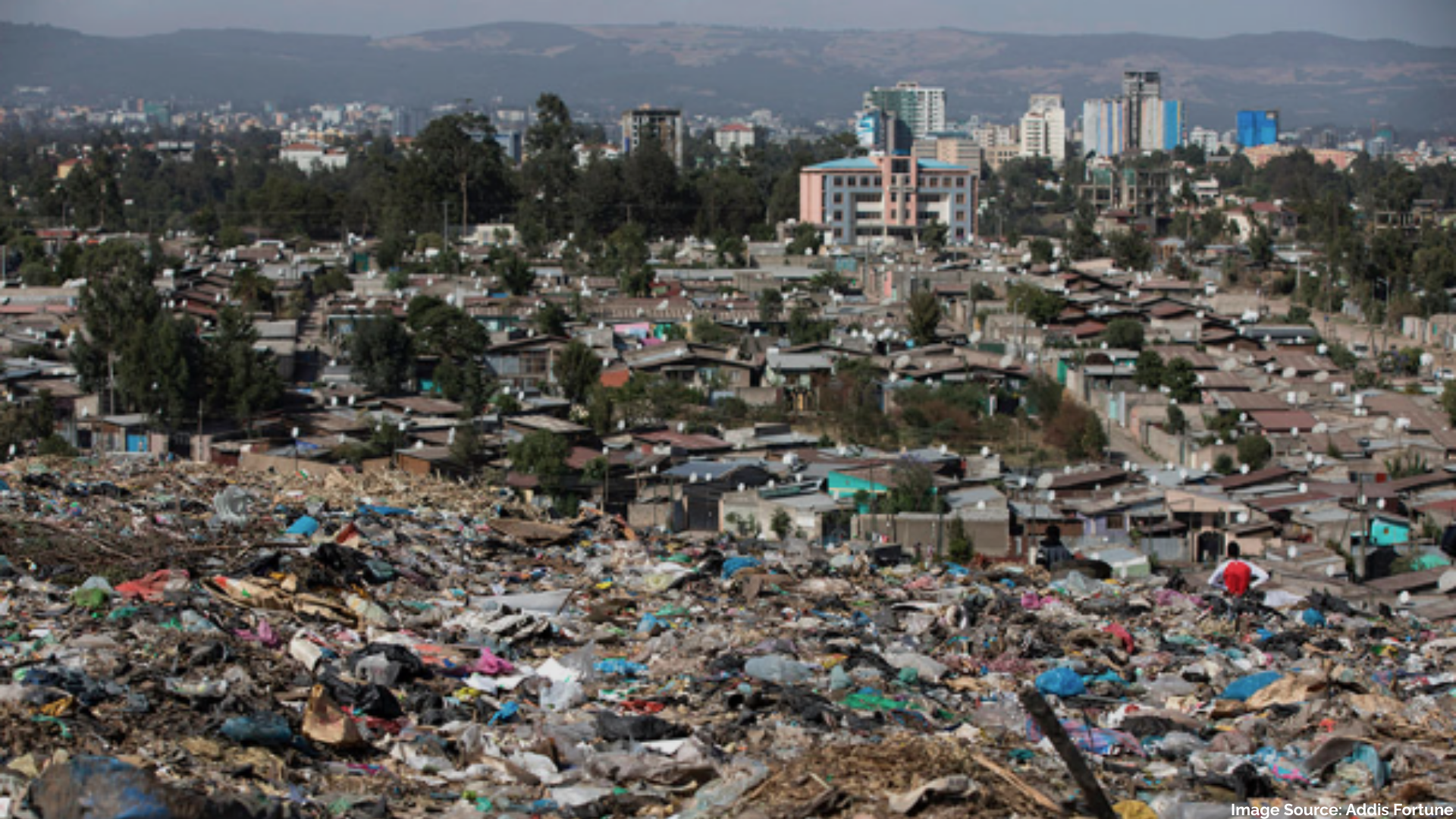
According to global estimates from UNICEF and Pure Earth, about 18 million children in Ethiopia may have dangerous levels of lead in their blood, and roughly 2.7 million may have very high levels that pose serious risks to their health.1 Such widespread exposure is important to note because there is no safe level of lead in the body. Even small amounts can affect a child’s learning, behavior, and development. Research from Ethiopia shows that people may be exposed to lead through contaminated drinking water, lead-based paint, informal battery recycling, certain workplaces, and some foods. Ethiopia faces several environmental and occupational sources of lead exposure. Addis Ababa (the capital city located in the central highlands of Ethiopia) has been the focus of multiple investigations. Ethiopia does not have a routine national childhood blood lead testing program, and environmental monitoring remains limited, which means most families are unaware of the risks around them.
Drinking Water Contamination
Using drinking water samples collected from household taps across all 10 sub-cities (the city’s main administrative districts) of Addis Ababa, one study tested water from 88 homes. Researchers collected water after running each tap for two minutes to remove stagnant water sitting inside the pipes. Even after flushing, which typically reduces contamination from plumbing corrosion, more than half of the samples still exceeded the World Health Organization (WHO) guideline of 10 micrograms per liter (µg/L), with concentrations ranging from 0.36 to 146.1 µg/L.2 Using these same household tap water measurements, researchers estimated what children’s blood lead levels might be if they regularly drank this water. Estimated average blood lead levels ranged from 3.23 to 14.65 µg/dL. When water lead levels were highest among the samples tested, the study estimated that about 9 out of 10 children would have blood lead levels above 5 µg/dL.2
Lead was also found in drinking water used in kindergarten schools in Addis Ababa. The average concentration was 62.37 µg/L among samples collected from 38 kindergarten schools.3 The study also analyzed “raw water,” meaning untreated water entering the city’s three major treatment plants (Akaki, Legedadi, and Gefersa). Lead levels in raw water from all plants exceeded WHO guideline values before treatment.
Using drinking water measurements from kindergarten schools, researchers estimated that approximately 20 percent of children attending these schools would have blood lead levels above 10 µg/dL.3
Lead-Based Paint
Lead-based paint is another major concern. A study conducted by PAN-Ethiopia and IPEN tested solvent-based decorative paints for home use sold in Ethiopia and found that 75 percent exceeded the international limit of 90 parts per million (ppm), a threshold used in many countries and reflected in a draft national regulation by Ethiopia’s Ministry of Environment, Forest and Climate Change. Forty-two percent contained more than 10,000 ppm, and some reached 100,000 ppm.4 These tests specifically evaluated new decorative paints sold on the consumer market, not legacy paint in older homes or buildings. These findings suggest that newly sold paints may continue to contribute to lead exposure in residential and child-occupied settings.
Environmental and Occupational Pathways
Informal used lead-acid battery recycling is one of the most significant sources of lead contamination in Ethiopian urban neighborhoods. PAN-Ethiopia (Pesticide Action Nexus Association), an Ethiopian non-governmental organization that studies chemical and environmental health hazards, documented workers engaged in these activities:
- dismantling batteries by hand
- melting lead in open-air furnaces
- handling battery acid without protective equipment
- disposing of lead waste directly on bare soil inside residential compounds
These activities release lead dust and fumes that spread into surrounding homes and outdoor play areas. A newspaper investigation from Addis Ababa described similar conditions, including informal battery smelting occurring next to homes in residential areas, which places other household members and nearby residents at risk of lead exposure due to the close proximity of recycling activities to living spaces.5
Lead exposure also affects workers in the automotive sector. A study of employees at the Anbessa City Bus Service Enterprise (the largest public bus operator in Addis Ababa) compared the BLLs of garage workers with office workers. Garage workers had an average blood lead level of 29.7 µg/dL, compared with 14.8 µg/dL among office staff; higher blood lead levels among garage workers were associated with longer working hours, more years of service, and prior employment in garage settings, as reported in the study.6 More than 20 percent of garage workers had levels above 40 µg/dL. Longer work hours, more years on the job, and prior employment in metal and garage environments were associated with higher BLLs.
Lead in Food and Household Products
Lead has also been detected in foods commonly used in Ethiopian households. A study of red pepper, ginger, turmeric, and korarima sold in the North Shewa Zone (a central region located north of Addis Ababa) found lead concentrations between 14.5 and 28.4 milligrams per kilogram (mg/kg). These values exceed the World Health Organization’s permissible limit for lead in spices, which ranges from 2.5 to 10 mg/kg. The levels found in this study were far above World Health Organization permissible limits for lead in spices, indicating that these commonly consumed foods may serve as a source of dietary lead exposure, with contamination likely originating from agricultural soil, irrigation water, grinding tools, or handling during distribution.7
Another study evaluated 211 spice samples collected from Addis Ababa (central Ethiopia), Adama (central-southeastern Ethiopia), and Arba Minch (southern Ethiopia). None of the samples showed evidence of intentional lead-pigment adulteration. All samples screened below 5 ppm using handheld X-ray fluorescence devices, and a laboratory-tested subset contained less than 2 ppm.8 These results suggest that lead found in some spices is most likely from environmental contamination.
Limited Capacity to Respond
Research conducted by Ethiopian scientists, universities, and partner organizations has documented multiple sources of lead exposure in Ethiopia, including drinking water, paint, and informal recycling activities. As a result, children who are exposed to lead are unlikely to be identified through systematic screening, and opportunities for environmental follow-up are limited.
Studies from Addis Ababa show that lead has been measured at household taps and in untreated source water entering drinking water treatment plants, with levels exceeding World Health Organization guideline values in multiple parts of the city.2,3 High lead levels have also been documented in newly sold decorative paints, indicating that people may continue to be exposed through consumer products.4
Informal battery recycling often occurs within or near residential areas, contributing to contaminated soil and dust where children live and play. People involved in recycling and other lead-related activities may also carry lead dust into their homes on clothing, skin, or shoes, creating opportunities for secondary exposure among household members, including infants and young children.
Overall, lead exposure in Ethiopia occurs through multiple pathways, while systems for routine testing, monitoring, and follow-up remain limited.
Opportunities for Action
Research findings point to several areas where action could reduce exposure:
- Strengthen enforcement on lead in paint, drinking water systems, and battery recycling activities.
- Expand laboratory capacity and integrate blood lead testing into maternal and child health services.
- Transition informal battery recyclers into regulated operations with safer equipment and environmental protections.
- Remediate contaminated soil in high-risk residential neighborhoods and school areas.
- Conduct community education campaigns about lead sources and prevention strategies.
- Increase monitoring of consumer products, including spices, to identify contaminated items.
Awareness of lead exposure in Ethiopia is growing thanks to the efforts of PAN-Ethiopia, IPEN, and the Lead Exposure Elimination Project. Global work by UNICEF and Pure Earth has also helped highlight Ethiopia’s lead burden, creating more space for conversations, solutions, and progress that can support safer environments for children and families.
Learn More
The Nevada Childhood Lead Poisoning Prevention Program (NvCLPPP) provides resources to help families understand and reduce lead exposure risks. To learn more about global work to prevent lead poisoning, visit www.pureearth.org or www.cdc.gov/nceh/lead.
References
- UNICEF & Pure Earth. The Toxic Truth: Children’s Exposure to Lead Pollution Undermines a Generation of Future Potential. unicef. 2020. Accessed January 6, 2026. https://www.unicef.org/media/73246/file/The-toxic-truth-children%E2%80%99s-exposure-to-lead-pollution-2020.pdf
- Endale YT, Ambelu A, Sahilu G. G, Mees B, Du Laing G. Exposure and health risk assessment from consumption of Pb contaminated water in Addis Ababa, Ethiopia. Heliyon. 2021;7(9):e07946. doi:10.1016/j.heliyon.2021.e07946
- Debebe D, Behulu F, Getaneh Z. Predicting children’s blood lead levels from exposure to school drinking water in Addis Ababa, Ethiopia. Journal of Water and Health. 2020;18(4):595-601. doi:10.2166/wh.2020.248
- PAN-Ethiopia & IPEN. New Study Still Finds High Lead Content in Many Ethiopian Paints | IPEN. 2017. Accessed January 6, 2026. https://ipen.org/news/new-study-still-finds-high-lead-content-many-ethiopian-paints
- Addis Fortune. Lead Recycling Pollutes Addis Abeba’s Backyards. 2025. Accessed January 6, 2026. https://addisfortune.news/lead-recycling-pollutes-addis-abebas-backyards
- Abebe MT, Kumie A, Ayana SW, Assefa T, Ambaw W. Assessment of occupational exposure to lead among workers engaged in a city bus garage in Addis Ababa, Ethiopia: a comparative cross-sectional study. J Occup Med Toxicol. 2024;19(1):26. doi:10.1186/s12995-024-00422-9
- Adugna T, Selale G, Regassa G. Assessment of Heavy Metal Contents in Some Common Spices Available in the Local Market of North Shewa Zone, Oromia Regional State, Ethiopia. Biol Trace Elem Res. 2024;202(7):3349-3361. doi:10.1007/s12011-023-03921-8
- Lead Exposure Elimination Project. Testing spices for lead content in Türkiye and Ethiopia. 2024. Accessed January 6, 2026. https://leadelimination.org/spices-studies-turkiye-ethiopia/